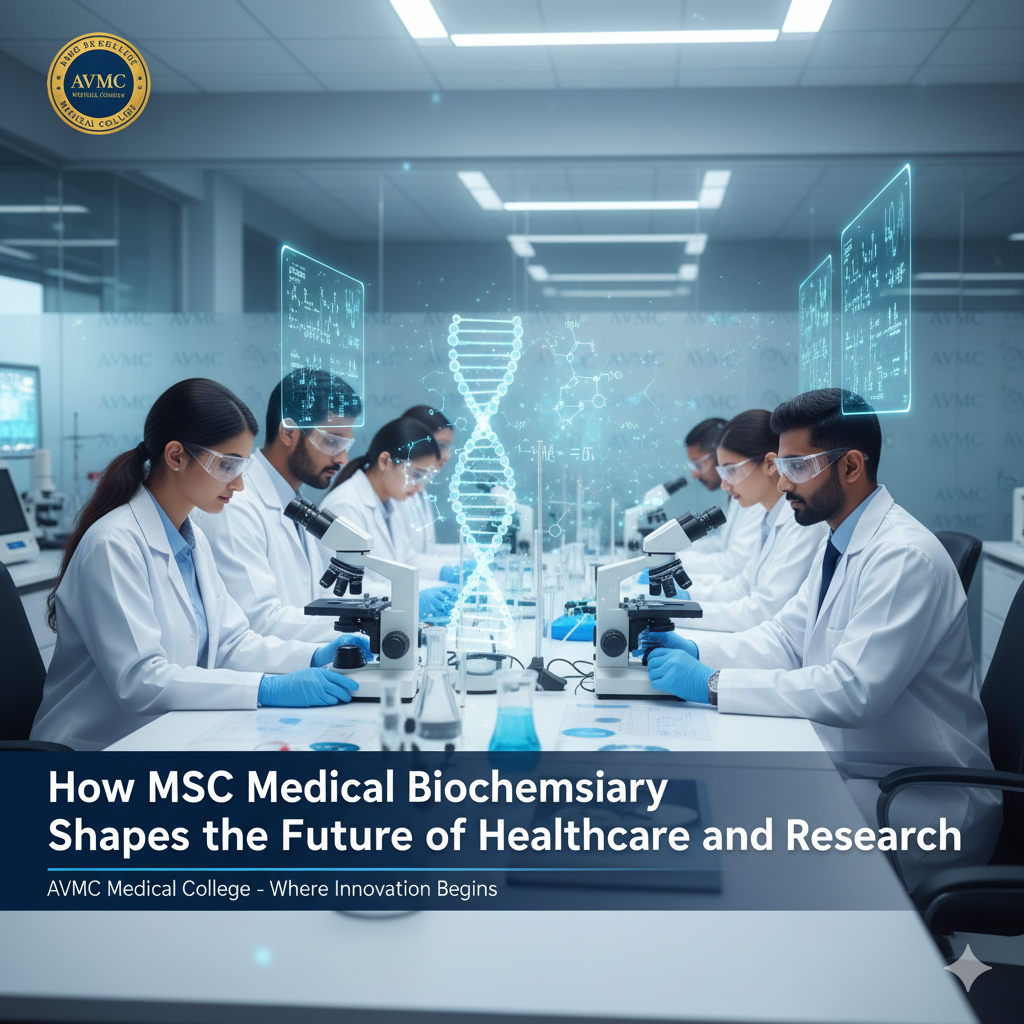
How MSc Medical Biochemistry Shapes the Future of Healthcare and Research
Introduction
MSc Medical Biochemistry is one of the most promising postgraduate programs that bridges the gap between medicine, biology, and chemistry. At AVMC Medical College, this course is designed to develop advanced research skills and a deep understanding of biochemical mechanisms that define human health and disease. With rapid developments in diagnostics, molecular biology, and healthcare innovation, medical biochemists are playing a vital role in shaping the future of medical science and research.
What is MSc Medical Biochemistry?
The MSc Medical Biochemistry program is a two-year postgraduate course that focuses on the study of biochemical processes within the human body. It explores molecular mechanisms, enzymatic functions, and cellular metabolism the foundation of understanding diseases and developing diagnostic tools.
This course prepares students for a career in clinical laboratories, hospitals, research centers, and pharmaceutical industries. It integrates medical science with biochemical principles to create professionals skilled in both analytical and diagnostic biochemistry.
Eligibility for MSc Medical Biochemistry in India
To apply for MSc Medical Biochemistry in India, candidates must have completed a BSc in Biochemistry, Chemistry, Biotechnology, or any related Life Science discipline from a recognized university. A minimum aggregate of 50% is usually required.
Some institutions, including AVMC Medical College, may conduct entrance exams or interviews to assess a student’s aptitude for advanced biochemical studies.
Eligibility ensures that students possess a foundational understanding of biology and chemistry, which helps them excel in advanced molecular biology and genetic engineering techniques during their postgraduate studies.
Course Structure and Curriculum
The MSc Medical Biochemistry curriculum combines theoretical understanding with practical laboratory exposure. Students gain hands-on training in advanced biochemical and molecular techniques.
Core subjects include:
- Advanced Biochemistry
- Molecular Biology and Clinical Biochemistry Research
- Enzymology and Metabolism
- Medical Laboratory Techniques
- Biotechnology and Biochemistry in Healthcare
- Instrumentation and Biostatistics
Laboratory training at AVMC emphasizes innovation, precision, and the ability to conduct independent research projects aligned with healthcare advancements.
Role of Medical Biochemistry in Healthcare Innovation
Medical biochemistry and healthcare innovation go hand in hand. Biochemists play a crucial role in diagnosing diseases, monitoring treatment responses, and developing personalized medicine.
At AVMC, students are encouraged to explore biomedical research and innovation that supports healthcare improvements from early disease detection to therapeutic advancements.
Research in medical biochemistry directly contributes to:
- Development of diagnostic reagents and biosensors
- Discovery of biomarkers for cancer and metabolic diseases
- Design of new therapeutic molecules and vaccines
- Understanding genetic and metabolic disorders
The integration of molecular biology and genetic engineering techniques enables future biochemists to contribute meaningfully to global healthcare systems.
Biotechnology and Biochemistry in Healthcare
Biotechnology and biochemistry in healthcare have transformed how diseases are detected, treated, and prevented. Medical biochemists utilize these technologies to decode the chemical basis of diseases and improve diagnostic efficiency.
AVMC’s program encourages innovation-driven learning where students explore:
- Recombinant DNA technology
- Clinical diagnostics and molecular testing
- Pharmacogenomics
- Drug development and biosafety standards
This multidisciplinary approach ensures graduates are equipped with the skills necessary for both research and clinical applications.
Career Opportunities After MSc Medical Biochemistry
Graduates of MSc Medical Biochemistry enjoy diverse career prospects across multiple domains. The field opens doors to biochemistry research associate jobs, pharmaceutical positions, and healthcare diagnostics.
Career options include:
- Clinical Biochemist – Working in hospital labs and medical research centers
- Biomedical Scientist – Conducting experimental research in healthcare innovation
- Pharmaceutical Biochemist – Developing new drugs and vaccines
- Research Associate or Analyst – Assisting in molecular and biochemical studies
- Academic Researcher or Lecturer – Teaching biochemistry at universities or colleges
In addition, healthcare and pharmaceutical biochemist roles are expanding globally, creating significant demand for professionals with postgraduate expertise.
Scope of MSc Medical Biochemistry in India and Abroad
The scope of MSc Medical Biochemistry is rapidly growing both in India and abroad. Healthcare organizations, biotechnology firms, and pharmaceutical industries are constantly seeking skilled biochemists who can contribute to innovative research.
In India, medical biochemists are employed in diagnostic laboratories, universities, and government research institutes. Internationally, opportunities exist in molecular diagnostics, bioinformatics, and drug discovery.
Why Choose AVMC Medical College for MSc Medical Biochemistry
AVMC Medical College offers a comprehensive MSc Medical Biochemistry program designed to meet global research standards. With modern laboratories, experienced faculty, and a research-driven curriculum, AVMC provides an environment where innovation thrives.
Key highlights include:
- Advanced molecular biology and clinical research training
- Access to cutting-edge laboratory infrastructure
- Opportunities for collaborative research and publications
- Placement support in healthcare and biotechnology industries
By combining academic excellence with hands-on experience, AVMC shapes future-ready biochemists capable of transforming healthcare systems worldwide.
Future Trends in Medical Biochemistry
The future of MSc Medical Biochemistry lies in personalized medicine, genomics, and bioinformatics. Researchers are now focusing on molecular-level understanding of diseases to develop targeted therapies.
Emerging areas include:
- Proteomics and metabolomics
- Gene therapy research
- Artificial intelligence in clinical biochemistry
- Molecular diagnostics and nanotechnology
These innovations are redefining how medical biochemistry contributes to global health outcomes.
Conclusion
The MSc Medical Biochemistry program is not just a postgraduate degree it is a gateway to the future of healthcare and scientific discovery. With its focus on biomedical research and innovation, AVMC Medical College equips students with the knowledge and technical expertise to drive meaningful changes in the healthcare and pharmaceutical industries.
For students aspiring to become part of a dynamic and evolving field that connects science with human health, pursuing MSc Medical Biochemistry at AVMC is the ideal next step.
Leave a Reply
You must be logged in to post a comment.