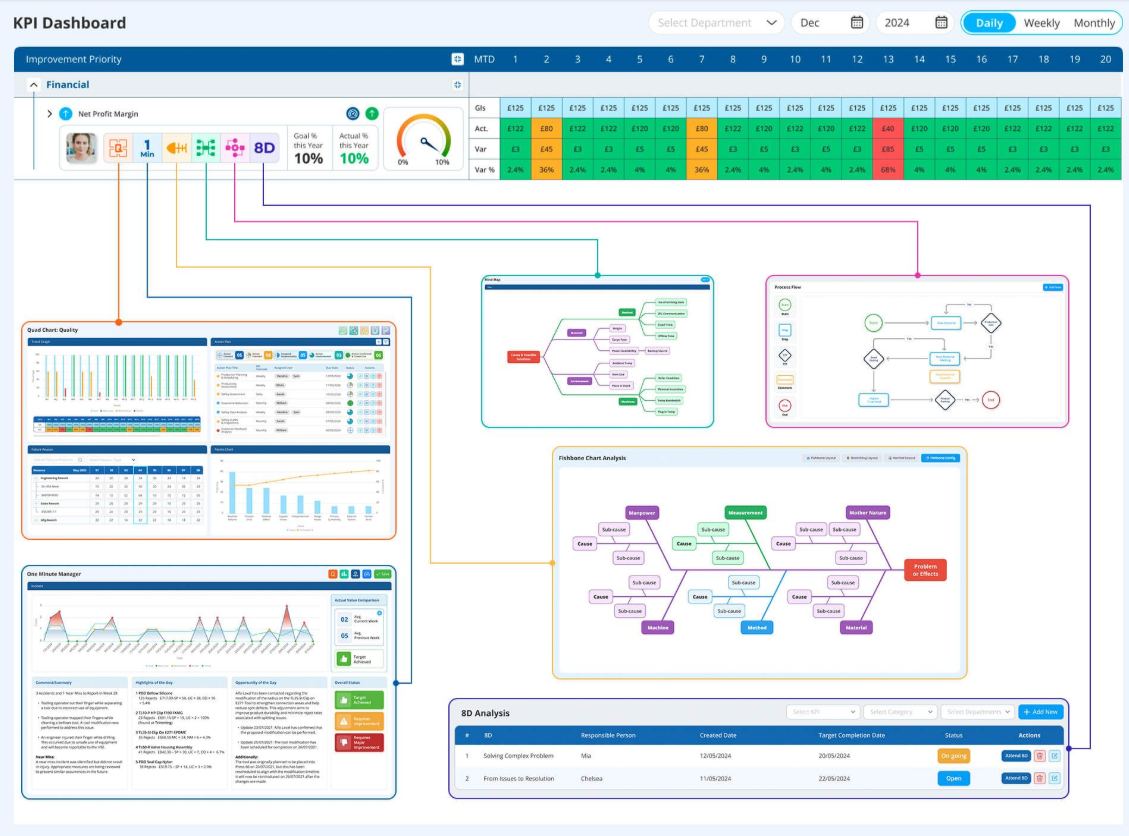
Gap Analysis is not a one-size-fits-all method — its approach, tools, and outcomes vary across industries based on operational challenges and performance goals. In manufacturing, it focuses on process efficiency, lean practices, cycle time reduction, and production quality using digital dashboards and visual management systems. In healthcare, the emphasis shifts to compliance, patient safety, and accreditation standards, often supported by frameworks like PESTLE or McKinsey 7S. Meanwhile, logistics and supply chain industries apply Gap Analysis to streamline lead times, improve route optimisation, and enhance tracking through integrated, data-driven systems.
For financial services, Gap Analysis takes a strategic angle—identifying policy gaps, improving customer experience, and accelerating digital readiness using structured organisational models such as Nadler-Tushman or Burke-Litwin. In energy and utilities, it plays a vital role in ensuring regulatory compliance, modernising infrastructure, and mitigating risks. Ultimately, the success of Gap Analysis lies in its adaptability — aligning analytical frameworks with the unique objectives, data environments, and strategic priorities of each sector to drive measurable performance improvement.
Leave a Reply
You must be logged in to post a comment.